
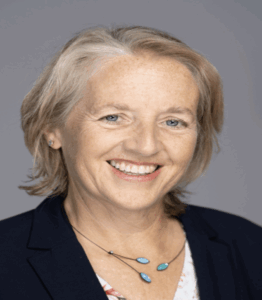
Annie Jonas, Ed.D.
By Annie Jonas, Ed.D.
NC Center for Afterschool Programs (NC CAP) Program Manager for Resilient Afterschool Programs
ASHEVILLE (March 19, 2026) – “It is in the shelter of each other that the people live.” – Irish proverb
I see nods of understanding as I read this proverb at the kickoff of the most recent WNC After 3PM Collaborative gathering in Brevard, NC. Remembering that we serve as shelter for one another is central to why we gather as an 18-county collaborative of afterschool professionals in Western North Carolina.
My team at the North Carolina Center for Afterschool Programs created the Collaborative, in partnership with Dogwood Health Trust, a year before Hurricane Helene ripped through our region, but the true value of the collective became crystal clear as the waters receded.
We needed each other.
The days following the storm revealed why collective action matters now and why it has always mattered throughout human history. Collective action, defined as, “any activity in which coordination by and across individuals has the potential to lead to achievement of a common objective,” may seem like an obvious response when individuals realize they hold similar goals.
However, complex community systems, a challenging economic environment, and sheer geographic distance in Western NC encourages a default to isolation and competition.
Afterschool programs in Western NC experience this isolation and competition even more acutely as many operate outside of larger organizations and some as the sole afterschool provider within a county or community.
In the most recent NC After 3PM report from the Afterschool Alliance (2025), parents in North Carolina indicate a strong desire for afterschool programs as well as high levels of satisfaction if their families do participate in afterschool.
Additionally, 84% of parents report that afterschool helps them keep their jobs. Eight in 10 North Carolina parents highlight that afterschool keeps their children safe, and a vast majority of North Carolina parents see that afterschool helps their students gain essential skills.
The NC After 3PM report also reveals significant bipartisan support for increased public funding for afterschool programs. The research is clear that afterschool plays a crucial role in the health and vitality of a community.
However, North Carolina is one of only 23 states without dedicated state funding for afterschool, even though four in five North Carolina families report they want afterschool but do not have access to it.
After the hurricane, the needs were so great, individual afterschool programs needed each other to continue providing life-sustaining services to families and communities.
Rutherford County was one of the hardest-hit counties during the storm. That’s one of the reasons John Miller, Director of Hopeworks, an afterschool program serving Rutherford County, participated in the WNC After 3PM Collaborative’s Building Resiliency Community of Practice.
This community of practice was a supportive learning community focused on how to help young people develop resiliency skills.
John says the Collaborative has also allowed Hopeworks to reconnect with other organizations in the community. John shares, “For me the coolest thing that’s come out of the Collaborative is having the time and space to sit at a table with people from this area and plan for how we want to work together.”
The Collaborative serves as a critical piece of a larger puzzle to unlock access to high-quality afterschool programs for North Carolina families who need them. However, if we want a future where all children can experience the benefit of afterschool, it requires investment from all sectors, including business, state and federal government, religious and philanthropic.
With our State Board of Education’s stated goal of our public schools being the best in the nation by 2030, afterschool programs will be a necessary and critical player to meet that goal. Getting there will require diverse, multi-sector investment to make afterschool affordable and accessible for the families who need it most.
The WNC After 3PM Collaborative will continue to advocate for this much needed investment in families in our region and across the state. But we are not waiting for that future; instead, we are building important relationships and infrastructure as we forge ahead.
Our collaborative approach is guided by the principles of Collective Action:
- Common Purpose/Shared Agenda: The Collaborative has coalesced around six key themes members determined are central to meet the needs and goals for afterschool programs in our region.
- Trust and Relationship Building: The Collaborative holds quarterly in-person meetings that are intentionally engaging and provide opportunities for building relationships and sharing stories.
- Shared Measurement and Accountability: This is the next step for the Collaborative. We are developing centralized data tracking that will help us gain a regional understanding of the impact of afterschool programming.
- Inclusive Engagement: Our six established Working Groups provide opportunities for members to be on the front line of priority setting.
- Backbone Infrastructure: Thanks to a founding grant and ongoing support from Dogwood Health Trust, there is dedicated support for the coordination of the WNC After 3PM Collaborative.
Immediately after Hurricane Helene, I joined neighbors in my mountain cove, outside of Asheville, as we became a shelter for one another – through sharing meals and resources, organizing around basic needs, and collectively supporting each other’s survival.
We knew that public funding and support would be crucial in the months and years of rebuilding ahead, but we were not waiting for it to arrive. We are stronger now for the connections and relationships we built in those weeks after the storm.
The strength of the WNC After 3PM Collaborative rests in its members who are willing to invest in something that defies a traditional model defined by competition and isolation. We are not waiting to be a shelter for one another. We know that, together, we are better able to serve the needs of children and families in our region.
Walter Bradley, Program Director of Youth Transformed for Life, described the impact of this kind of approach:
“This Collaborative shows us how to use the true definition of community. What we learn and do in this small room, we can bring out into the world to make real change. It starts here.”
Leave a Reply